*** Translated with www.DeepL.com/Translator***
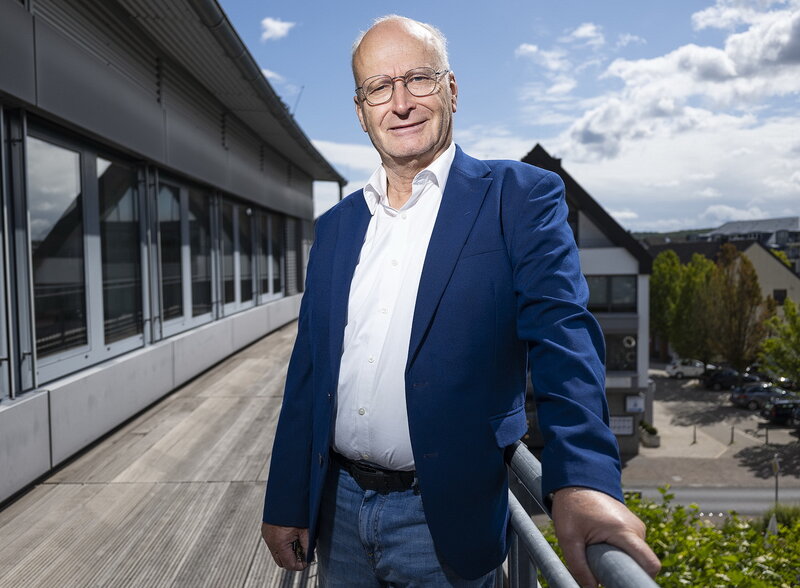
Mechernich - When the door to the Mechernich mayor's office closes behind Dr Hans-Peter Schick on 31 October 2025, it will mark the end of more than just a term of office. It will be the end of a political chapter that has shaped the town and set its pace since 1999 – so significantly that the term 'Schick era' is already appropriate.
Born in 1961 in the small town of Bescheid, Schick brought with him both an awareness of his origins and sophistication: a farmer's son, a doctor of ecology, a Christian Democrat with a Rhineland sense of humour. When he took over as mayor at the age of 38, he was met with scepticism – especially in his home corner, the much-maligned and admired "wild west" of the town of Mechernich.
Despite all the prophecies of doom, the young candidate won people's trust because he focused on staying grounded rather than party doctrine. His credo was, and remained for a long time, "to win people's hearts". It became the compass for his work and, despite his rough edges, helped him achieve unexpected popularity.
Schick led Mechernich out of decades of scandals and personnel issues into a phase of systematic municipal modernisation. His mentor and supporter in this endeavour was initially the First Deputy Mayor Christian Baans, a Social Democrat.
Under Schick's leadership, the budget grew from 38 to 76 million euros, trade tax revenues increased fivefold, and the city gained thousands of new residents. New development areas, a barrier-free railway station, the Eifel thermal baths, new schools and an efficient commercial network with the Hochwald dairy as its "beacon" are visible evidence of his long-term policy.
Smart land policy
Mechernich's economic substance and jobs were secured in particular by its clever land and industrial settlement policy.
Schick never shied away from conflict. He weathered the artificially inflated "lead scandal" and party political intrigues with straightforwardness and perseverance.
He was able to make his point clearly and remain uncompromising when it came to the good of the town – yet he remained accessible, a mayor for all citizens who tended to bridge political differences rather than exacerbate them. His leadership style was less that of a party soldier and more that of a local community organiser: pragmatic, Christian in character, unwavering in his convictions. As his term of office progressed, he was also able to "bang his fist on the table" from time to time.
His family and home remained his backbone. With his wife Gaby and son Alexander, he remained centred in Bescheid and deliberately declined career opportunities in Düsseldorf or Berlin. This down-to-earth attitude lent credibility to his politics: he himself embodied what he demanded for Mechernich – moderation, sustainability, a sense of responsibility.
Today, after more than a quarter of a century, Mechernich is a town with a new centre and a clear vision for the future. Schick did not reap all the fruits of his labour himself, but he sowed seeds that continue to bear fruit: from the educational landscape to inter-municipal cooperation and bold proposals for regional administrative reform.
Signature remains recognisable
His successor, Michael Fingel, would be well advised not to try to imitate him. Dr Hans-Peter Schick stands for a unique combination of strategic vision, Rhineland quick-wittedness and patient development work – a signature style that will remain, even when its creator retires on 31 October 2025.
Schick will continue his work – as a family man, farmer, district councillor and chairman of the "Stella Maris" hospice support association in Mechernich. On the one hand, he is of a certain age, but on the other hand, he is not yet old. He would be well advised not to overdo it. His life and achievements are already impressive – and he can now refresh his family life, which may have inevitably been neglected.
pp/Agentur ProfiPress